Among the digital marketing trends in 2025, one of the most profound is how businesses connect with their audiences online. The way people search for information, discover services, and interact with content has evolved. While traditional Search Engine Optimization (SEO) has long been the go-to strategy for improving visibility online, a new contender has quietly made its way into the spotlight: Generative Engine Optimization (GEO).
With the rise of generative AI systems like ChatGPT, Google Gemini, and voice-based assistants, content is no longer just discovered through search engines. Instead, it’s being summarized, interpreted, and presented directly by these AI platforms. This shift means we must rethink how we write, structure, and position our content to align with how these systems consume and deliver information.
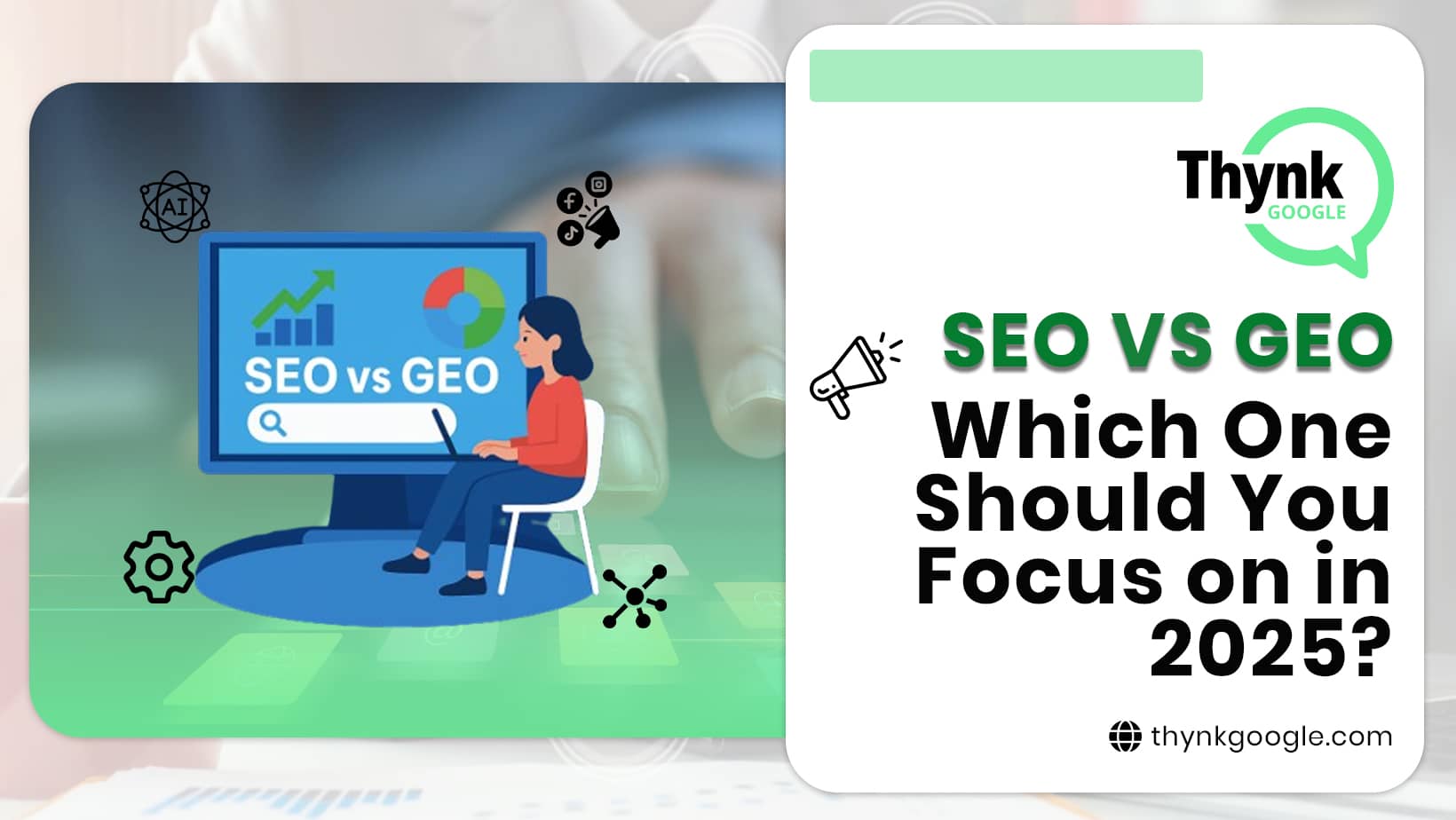
With these changes in how people discover content, the question in 2025 becomes: where should you focus your digital strategy — on SEO or GEO? To answer that, let’s unpack both approaches.
What is SEO?
SEO, or Search Engine Optimization, helps your website get found on search engines like Google or Bing when people are looking for what you offer. If someone types in a phrase like “best running shoes,” SEO helps determine whether your site shows up on that coveted first page.
It’s all about keywords, quality content, technical structure, and backlinks. You’re basically speaking Google’s language and telling it, “Hey, my content is useful. Put me in front of people.”
It’s not new, and it’s not going anywhere. People still rely heavily on search engines to look up products, services, tutorials, reviews, and more. In 2025, SEO remains a powerful tool, but it’s no longer the only strategy businesses need to stay competitive.
What is GEO?
GEO stands for Generative Engine Optimization, a relatively new approach that focuses on making your content more visible and useful to AI tools that generate responses instead of just serving search results.
Think about how often people now turn to AI tools for quick answers. Instead of searching on Google for “how to cook quinoa,” many now ask ChatGPT or Gemini, “What’s the easiest way to make quinoa for lunch?” These tools pull information from across the web and generate a response, and if your content is written well, it might be your site they pull from.
With GEO, you’re not just trying to rank—you’re aiming to be included in the responses generated by AI tools. This requires writing in a clear, conversational tone, structuring content to directly answer common user questions, and using examples, facts, and formatting that help AI models quickly extract relevant information. The goal is to build content that AI systems recognize as trustworthy and contextually useful.
SEO vs. GEO: How Are They Different?
While both strategies aim to get your content seen, they do it in different ways.
SEO is all about optimizing for search engines. You’re targeting specific keywords, using metadata, improving page speed, and building backlinks. The goal is to appear high in search rankings so users click through to your website.
GEO, on the other hand, focuses on tailoring your content so it can be effectively used by generative AI platforms. These tools don’t rely on traditional ranking systems like search engines do. Instead, they scan the web for clear, reliable, and well-structured information to generate accurate responses to user queries. If your content is factual, easy to understand, and framed as if directly answering someone’s question, it’s more likely to be surfaced by these AI systems
So, while SEO is about making your content visible to search engines, GEO is about making sure that visibility reaches the AI searches.
The Strengths and Weaknesses of Each
SEO is a long-standing and reliable strategy. It gives you clear goals to aim for and offers trackable data like rankings and click-through rates. But it’s also extremely competitive. Everyone’s doing it. You could be doing everything right and still struggle to rank on page one.
GEO, on the other hand, is newer and still finding its feet. It’s less crowded, which means more opportunity, but also less predictable. However, if you’re ahead of the curve and writing high-quality content that AI tools can trust, you’ve got a better shot at standing out early.
The key is understanding how people search. Sometimes they want a list of resources (that’s SEO), and sometimes they want a direct, thoughtful answer (that’s GEO).
Which One Should You Focus On?
In 2025, the smartest marketers are working with both SEO and GEO. Here’s why that works:
- SEO brings you Google traffic. It helps you rank for specific searches and show up when people browse.
- GEO puts you into AI conversations. It helps your content get included when someone asks a chatbot for help or advice.
If you rely only on SEO, you risk being invisible in a world where more people are asking questions to AI. Focusing only on GEO? You might be missing out on steady, high-quality traffic from search engines.
The Smarter Move? Blend Them.
Build your foundation with strong SEO—ensure your website is technically optimized, mobile-friendly, fast, and rich with relevant content. Then layer on GEO principles: write in a natural, human tone; address real user questions directly; support your points with examples and data; and structure information in a way that AI systems can easily understand and retrieve.
Then take things further with GEO. Write in a clear, natural tone. Answer real questions. Go deeper into topics with examples and stats. Structure your content so that even an AI model reading it can quickly pick up what matters.
When done well, you won’t just appear on page one, you’ll already be influencing the decision before the user even clicks.
Final Thoughts
SEO vs. GEO are both part of a bigger shift in how we find and consume information online.
2025 has taught us that people want answers that are fast, clear, and trustworthy. Whether they’re typing into Google or chatting with an AI, your content needs to be ready.
So don’t choose between SEO vs GEO. Learn how to bring them together.
Ready to Use Both SEO and GEO in 2025?
Staying visible online isn’t just about ranking anymore; it’s about being found everywhere your audience is searching, scrolling, or asking. If you’re ready to start growing, now’s the time to act.
Let’s craft a content strategy that speaks to both search engines and smart AI tools, boosting your visibility, credibility, and results. Partner with Thynk Google Media – a trusted digital marketing agency in Florida that truly gets it.